
Could not load the map.
Listings are temporarily unavailable
We couldn't load our listings right now. Please refresh the page or try again in a moment.
No matching listings
We don't have any listings that match these filters yet. Check back soon.

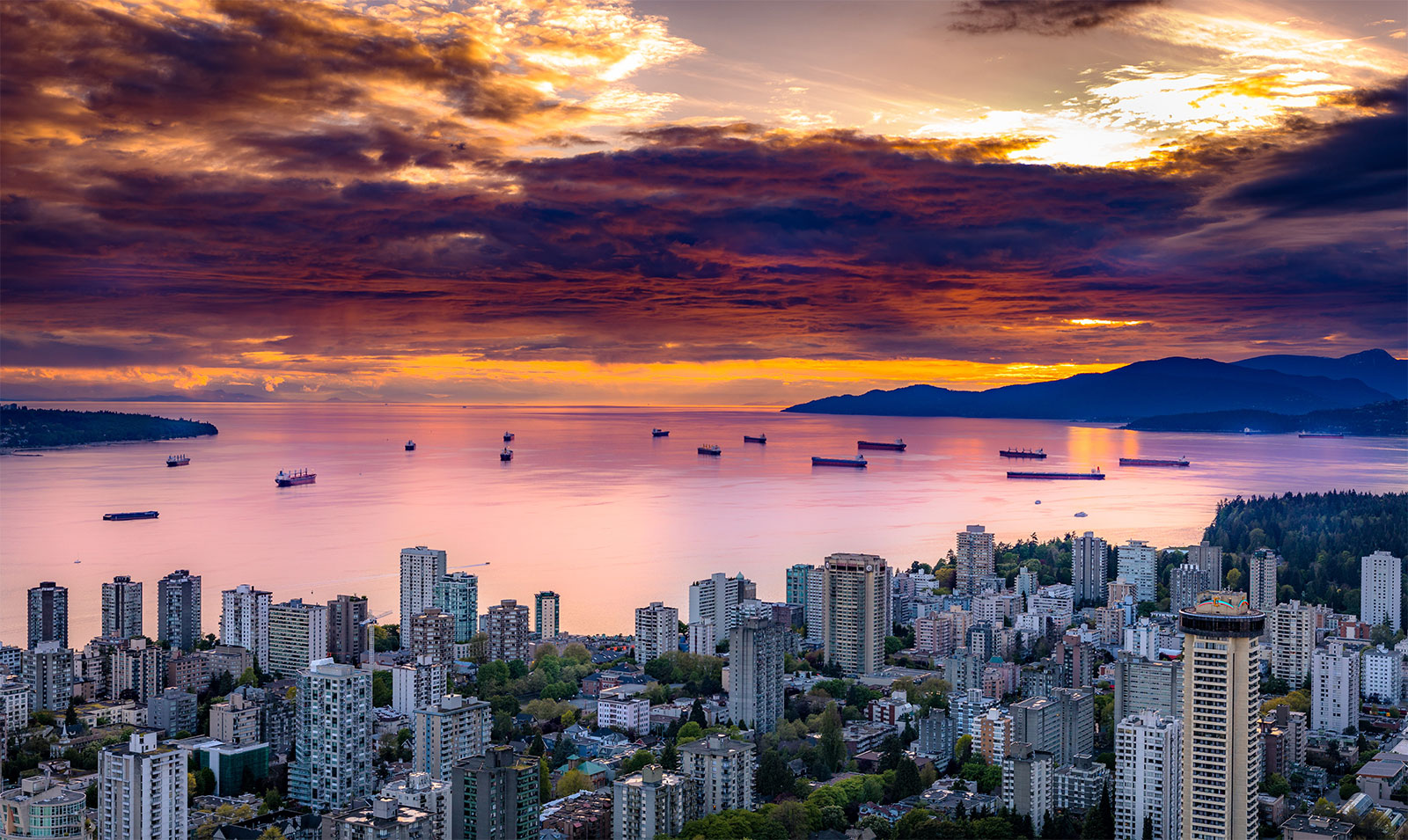
Vancouver is the core of the region and by far the most varied market in it. It is worth being straightforward about what this page is: Kristy Mattiazzo practice is centred on Coquitlam and the Tri-Cities, and most clients who look at Vancouver are weighing it against those options rather than committing to it blind. So this is an orientation to how the city housing actually breaks down, and what a Vancouver dollar buys compared with a Tri-Cities one.
The first thing to understand is that Vancouver is physically constrained. Water on three sides, a fixed land base, and a long-standing policy preference for adding homes inside existing neighbourhoods rather than at the edge. Everything about price, density and renovation rules in this city follows from having nowhere to expand.
How the city breaks down
The downtown peninsula
Coal Harbour, Yaletown, the West End and the central business district. Almost entirely strata, overwhelmingly concrete, and the most genuinely car-optional place in the province. The West End holds the older and more affordable apartment stock; Coal Harbour and Yaletown are newer and priced accordingly.
The West Side
Kitsilano, Point Grey, Dunbar, Kerrisdale, Shaughnessy, Oakridge, Marpole and Cambie. The traditional prestige half of the city, mixing pre-war character homes with substantial modern rebuilds, and containing both the most expensive detached streets in Canada and a rapidly densifying Cambie and Oakridge corridor.
East Vancouver
Commercial Drive, Mount Pleasant, Hastings-Sunrise, Renfrew-Collingwood, Killarney, Victoria-Fraserview and South Vancouver. Historically the working and immigrant half of the city, and still where the most attainable detached housing sits. It is also the home of the Vancouver Special, which deserves its own note below.
The false creek and Olympic Village corridor
Newer mid-rise strata along the south shore of False Creek, with seawall frontage and strong walkability. Distinct from both downtown and the residential West Side in feel and in price structure.
The Vancouver Special
If you look at detached housing in East Vancouver you will meet the Vancouver Special, and it is worth knowing what you are looking at. Built largely between 1965 and 1985, there are over ten thousand of them, making it the single most common house form in the city.
Its shape was not a style choice. A city zoning bylaw of the era excluded the basement from the calculation of maximum floor area, so builders produced a box that maximised what the envelope allowed: a low-pitched roof, a balcony running the full width of the front, brick or stone on the ground floor and stucco above. The unfinished basement made it straightforward to add a suite or accommodate extended family, which is precisely why it became the default house for multi-generational households across East Van.
For a buyer today that history is useful. A Vancouver Special is spacious, structurally straightforward, cheap to reconfigure relative to a character home, and almost always suite-capable. It is also unfashionable, which is frequently reflected in the price. If you are comparing it against a newer Tri-Cities house, the honest comparison is square footage and flexibility against finish and efficiency.
Housing stock, by era
- Pre-1940 — character homes concentrated in Kitsilano, Mount Pleasant, Grandview and the older West Side. Craftsman and Edwardian stock with real charm and real systems obligations.
- 1940s to 1960s — post-war bungalows throughout East Vancouver and the southern city.
- 1965 to 1985 — the Vancouver Special era, plus the first significant apartment stock in the West End.
- Late 1980s to 1990s — heavy wood-frame condominium construction. This is the era associated with building-envelope failures across the Lower Mainland, before rainscreen construction became standard around the turn of the 2000s.
- 2000s to today — concrete towers downtown and at Oakridge and Cambie, plus laneway houses and infill throughout the detached neighbourhoods.
Getting around
Vancouver is served by three SkyTrain lines. The Expo Line runs east from downtown through East Vancouver toward Burnaby, New Westminster and Surrey. The Millennium Line serves the eastern city and connects toward Burnaby and the Tri-Cities, and it has been extended west along the Broadway corridor. The Canada Line runs south from downtown through Cambie and Marpole to Richmond and the airport. That network, plus one of the more usable bus systems in North America and an extensive separated bike network, is why car-free living is realistic here in a way it is not in most of the region.
From a Tri-Cities perspective the relevant comparison is simple. A Coquitlam Town Centre address puts you on the Millennium Line and roughly forty-five minutes to downtown. A Vancouver address inside the city removes that commute and charges you for it, usually in space.
What to check before you buy in Vancouver
- What you are actually allowed to build. Vancouver zoning and character-retention rules vary block by block, and they govern whether you can add a laneway house, retain and add, or demolish and rebuild. Establish this before you buy a renovation plan.
- Buried oil tanks. Very common in pre-1960s Vancouver homes. An undiscovered tank is an environmental and cost problem, not a cosmetic one.
- Knob-and-tube wiring and asbestos. Standard concerns in pre-1940 stock, and both are insurer and renovation issues.
- Building-envelope history on 1980s and 1990s wood-frame strata. Ask directly whether the building has been rainscreened, what it cost, and whether it was fully funded. This is the single most consequential question on a condo of that vintage.
- Strata depreciation reports. Read the report and two years of minutes on any strata purchase, with attention to envelope, plumbing and elevator funding.
- Suite legality. Many Vancouver houses carry a suite. Legal, non-conforming and unpermitted are three very different things for financing, insurance and rental income.
Comparing Vancouver with the Tri-Cities?
This is the conversation Kristy Mattiazzo has most often: a buyer priced out of the Vancouver house they wanted, deciding whether the Tri-Cities trade is worth it. It usually is, and sometimes it is not, and the answer depends on your commute, your schedule and how much space you actually need. Get in touch and we can work through the real numbers rather than the headline ones.
Kristy’s practice is centred on Coquitlam and the Tri-Cities. See her Coquitlam Realtor page for how she works with buyers and sellers, and what to expect from the process.