
Could not load the map.
Listings are temporarily unavailable
We couldn't load our listings right now. Please refresh the page or try again in a moment.
No matching listings
We don't have any listings that match these filters yet. Check back soon.
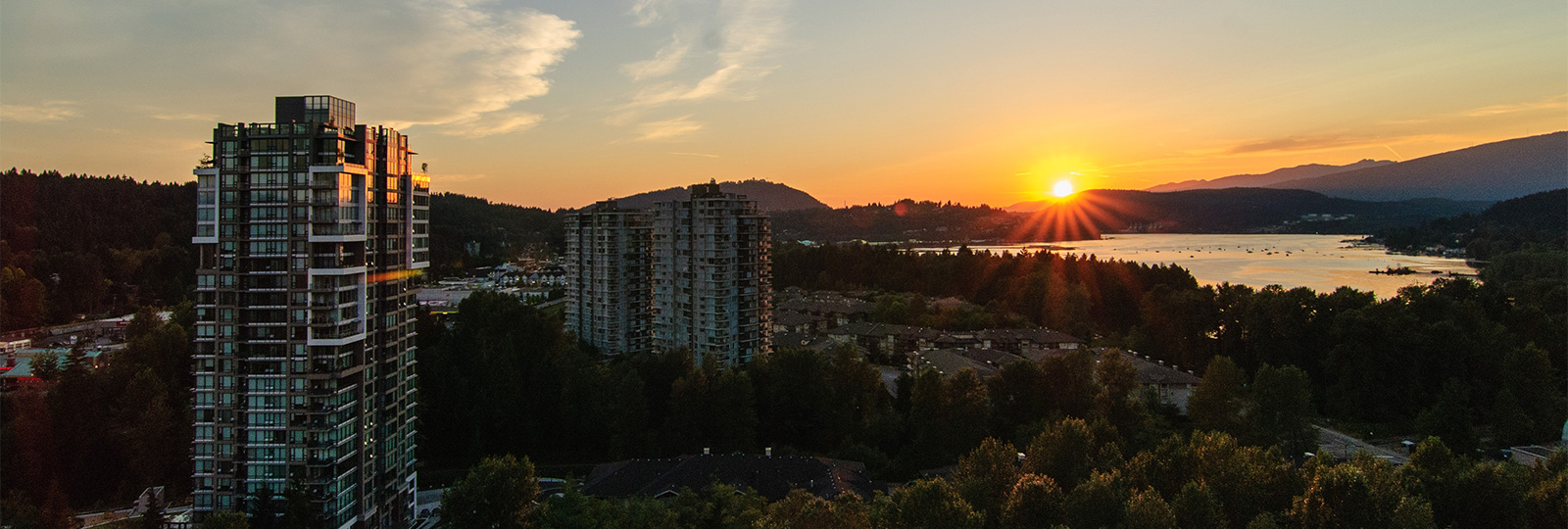
Port Moody is the smallest of the three Tri-Cities and the one with the strongest sense of place. It sits at the head of Burrard Inlet, hemmed in by water on one side and forested slopes on the other, and it has leaned deliberately into that geography, branding itself the City of the Arts and building its public life around Rocky Point Park, the Shoreline Trail and the cluster of craft breweries across the road from the park.
For buyers the city divides cleanly in two: the walkable inlet-level villages near transit, and the detached family neighbourhoods up the mountain. They are different products at different prices with different daily routines, and most people know which one they want within an afternoon.
The areas within Port Moody
Port Moody Centre
The original townsite and the heart of the city, now in the middle of significant redevelopment. Character homes, local businesses and new condominium towers sit close together near Moody Centre Station. The most interesting part of the city to watch, and the part where the streetscape will change most over the next decade.
Klahanie
At the head of the inlet, steps from Rocky Point Park and the breweries. A planned community of low-rise condominiums, two high-rise towers, townhomes and a small commercial centre, with easy access to both the Barnet and Lougheed highways. Popular with younger families and professionals for good reason: the location does most of the work.
Suter Brook Village
Central Port Moody, contemporary in design and built for walkability. Shops, groceries and services are at the base of the buildings, and Inlet Centre Station is close. If you want to live in Port Moody without a car being essential, this is the shortlist.
Newport Village
At Ioco Road and Guildford Way, an established mixed-use village with a strong local retail core. Slightly older than Suter Brook and, for many buyers, quieter for it.
Heritage Mountain and Heritage Woods
Up the slope, and the classic family suburb of the Tri-Cities: spacious detached homes, leafy streets, strong schools, trail access and frequent views. The trade is elevation and car dependence. These are not walk-to-transit neighbourhoods, and winter driving on the mountain is a real consideration.
College Park, Glenayre and Ioco
The established post-war detached pockets on the western side toward Burnaby, and along Barber Street toward Belcarra. Older stock on good lots, generally more attainable than the mountain, and closer to Burnaby for commuting.
Housing stock, by era
- Pre-war and early post-war — the original Moody Centre townsite, plus Glenayre and College Park. Older houses, good lots, systems well past original life.
- 1980s to 1990s — the first mountain subdivisions. Large family homes now at the age where envelopes, roofs and plumbing come due. This is the Poly-B window.
- 2000s — Heritage Woods build-out plus Newport Village and the first Suter Brook phases.
- 2010 to today — Klahanie, later Suter Brook, and the current towers and townhouses around Moody Centre.
Getting around
Port Moody has two SkyTrain stations on the Evergreen Extension, at Moody Centre and Inlet Centre, and Moody Centre is also a West Coast Express station. That gives the inlet-level neighbourhoods two separate rail options, which is unusual for a city this size. Road access is via the Barnet Highway toward Burnaby and the Lougheed Highway toward Coquitlam.
The distribution is the point, though. Moody Centre, Klahanie, Suter Brook and Newport Village are genuinely transit-oriented. Heritage Mountain and Heritage Woods are not, and the difference is easily half an hour each way. Test your real route before you choose your altitude.
What to check before you buy in Port Moody
- Poly-B plumbing. Grey polybutylene pipe went into Lower Mainland homes built roughly between 1978 and 1995, which covers the earlier mountain subdivisions. It degrades from the inside against chloramines in Metro Vancouver treated water and insurers now price or decline for it. Confirm presence and replacement.
- Slope, drainage and retaining walls. On Heritage Mountain and Heritage Woods, grading, perimeter drains and retaining structures deserve close attention, and so does the driveway in February.
- What is approved near Moody Centre. The townsite is actively redeveloping. Check what is approved next door and across the street before you buy a view or a quiet street.
- Strata depreciation reports. Much of the desirable inventory here is strata. Read the depreciation report and two years of minutes, with attention to envelope and amenity funding.
- Rail and industrial frontage. The inlet edge carries working rail and industry alongside the parks. It is fine on most streets and audible on some. Visit at different times of day, including early morning.
Thinking about buying or selling in Port Moody?
Port Moody asks you one question early: village or mountain. Kristy Mattiazzo works both sides of it across the Tri-Cities and can help you decide honestly rather than after the fact. Get in touch.
Kristy’s practice is centred on Coquitlam and the Tri-Cities. See her Coquitlam Realtor page for how she works with buyers and sellers, and what to expect from the process.