
Could not load the map.
Listings are temporarily unavailable
We couldn't load our listings right now. Please refresh the page or try again in a moment.
No matching listings
We don't have any listings that match these filters yet. Check back soon.
New Westminster is the oldest incorporated city in western Canada, incorporated in 1860, and it served as the first capital of British Columbia before that role moved to Victoria. That history is not decoration here. It is the defining fact of the housing market: roughly forty per cent of the city single-family stock was built before 1940, concentrated in Queens Park, Sapperton and the West End. Nowhere else in Metro Vancouver offers heritage housing at this density.
The second defining fact is the hill. The city runs down a steep slope from Uptown to the Fraser River, and where a property sits on that slope shapes its views, its drainage, its parking and its walkability far more than the street name does.
The areas within New Westminster
Queens Park
The heritage heart of the city, and an intact concentration of late-Victorian and Edwardian residential architecture rarely equalled in the region. Large lots, mature trees, and the city most iconic park at its centre. Buying here means buying into a preserved streetscape, with the obligations that come with it, so ask specifically what heritage protections apply to the property you are considering.
Sapperton
East along the river, mixing older character homes with post-war housing, and anchored by Royal Columbian Hospital. Its own SkyTrain station and a more relaxed price level than Queens Park make it one of the more practical entry points to older New Westminster.
Uptown
The commercial and residential hub along Sixth Avenue at the top of the hill. A dense mix of older low-rise apartments, newer towers and the shops and services most residents actually use day to day. Strong walkability without the river-level tourism.
Downtown and the Quay
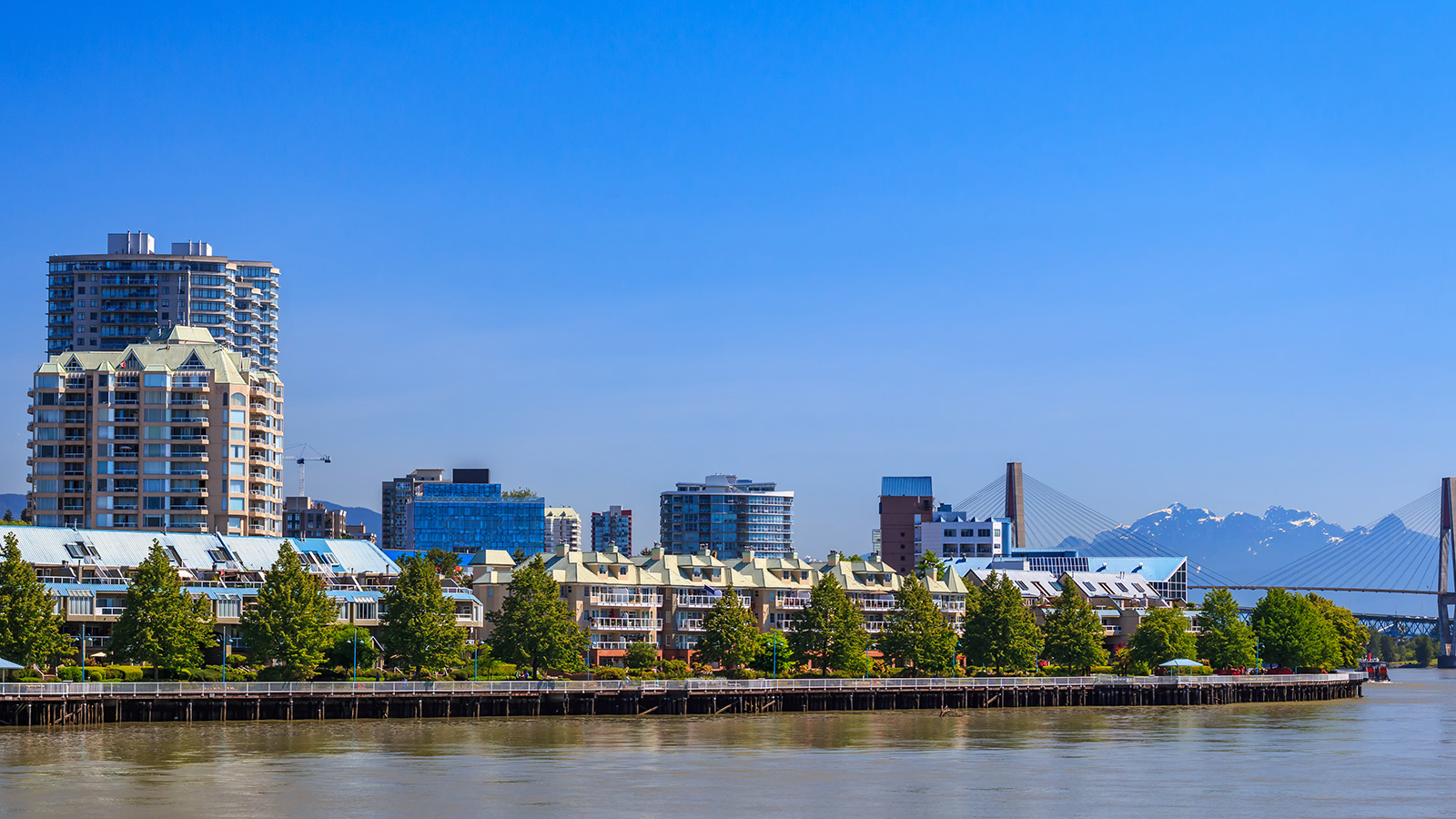
The river edge, with the Quay boardwalk, the market and the largest concentration of apartment stock in the city. Both Columbia and New Westminster stations sit here. This is the most urban and most transit-immediate part of the city.
The West End
West toward Burnaby, largely pre-war and early post-war detached, quieter, and served by 22nd Street Station. A good middle ground between heritage character and everyday practicality.
Queensborough
Physically separate, on the northern tip of Lulu Island across the Fraser, and reached by the Queensborough Bridge. The newest part of New Westminster by a wide margin: modern detached homes, row homes and townhouses rather than heritage. It is also the only part of the city that is not on the hill, which cuts both ways.
Housing stock, by era
- Pre-1940 — about forty per cent of the detached stock, concentrated in Queens Park, Sapperton and the West End. Genuine character, and genuine systems work.
- Post-war to 1970s — infill throughout the city plus most of the older walk-up apartment stock in Uptown and Downtown.
- 1980s to 2000s — condominium development along the river and in Uptown, and the first wave of Queensborough subdivision.
- 2010 to today — tower and townhouse development Downtown, in Uptown and at Sapperton, and continued build-out in Queensborough.
Getting around
New Westminster is unusually well served for its size: five Expo Line stations sit inside the city, at 22nd Street, New Westminster, Columbia, Sapperton and Braid. Road access runs via Highway 91, the Queensborough Bridge, the Pattullo Bridge to Surrey and the Brunette interchange to Highway 1. The caveat is that bridge traffic is a daily reality here, and the hill means a short distance on a map can be a long walk in practice.
What to check before you buy in New Westminster
- Heritage status and what it obliges. Protection varies from none, to a conservation area, to a designated building. It affects what you may change, how you may change it, and sometimes what you may claim. Establish this in writing before you plan a renovation.
- Pre-1940 systems. Knob-and-tube wiring, original galvanised supply lines, asbestos in insulation and finishes, and undersized electrical service are all common in this stock. Budget for a full inspection, not a cursory one.
- Buried oil tanks. Widespread in the pre-1960s era across the city. A decommissioned or undiscovered tank is a cost and environmental question, not a cosmetic one.
- Slope and drainage. On the hill, perimeter drains, retaining walls, grading and off-street parking all deserve real attention. Water management is the recurring issue.
- Queensborough is a floodplain. It sits low behind dikes. Ask specifically about flood mapping and insurance for the address, rather than assuming it matches the rest of the city.
- Strata depreciation reports. The city has a deep stock of older low-rise. Read the depreciation report and two years of minutes before removing conditions.
Thinking about buying or selling in New Westminster?
New Westminster rewards buyers who actually want an older house and know what that means, and it frustrates buyers who wanted new construction with character cladding. Kristy Mattiazzo will tell you which one you are. Get in touch.
Kristy’s practice is centred on Coquitlam and the Tri-Cities. See her Coquitlam Realtor page for how she works with buyers and sellers, and what to expect from the process.